Renovation goes wrong for structural reasons, not accidental ones. Most of them are avoidable by doing the work in the right order.
Survey before you decide anything
The defining feature of renovation is that the starting condition is only partly known. Every decision made before the survey is provisional, whether or not it is described that way.
A useful survey covers structure, the condition and capacity of the electrical and cooling systems, plumbing and drainage, waterproofing, and the actual dimensions of what is there rather than what the original drawings claim. Where something cannot be confirmed without opening up, that should be listed as an open item, not assumed.
Separate what must be done from what you want done
Renovation budgets are decided almost entirely by this split, and it is the step most often skipped.
Necessary work is what the building requires regardless of taste: failed waterproofing, an electrical installation at the end of its life, drainage that does not fall correctly, structural repair. Discretionary work is what you want: new layout, new finishes, better joinery, a different kitchen.
Once both lists exist with costs against them, the trade-offs become yours to make. Without the split, necessary work tends to get discovered mid-project and paid for by cutting the finishes you actually wanted.
A workable sequence
- Survey and condition report. Establish what is there.
- Feasibility of the changes you want. Test layout changes against the structure before designing to them.
- Scope in two columns. Necessary and discretionary, each costed.
- Design and specification. Fix finishes, joinery and services early, because they drive the programme.
- Approvals and procurement. Submit, and order long-lead items.
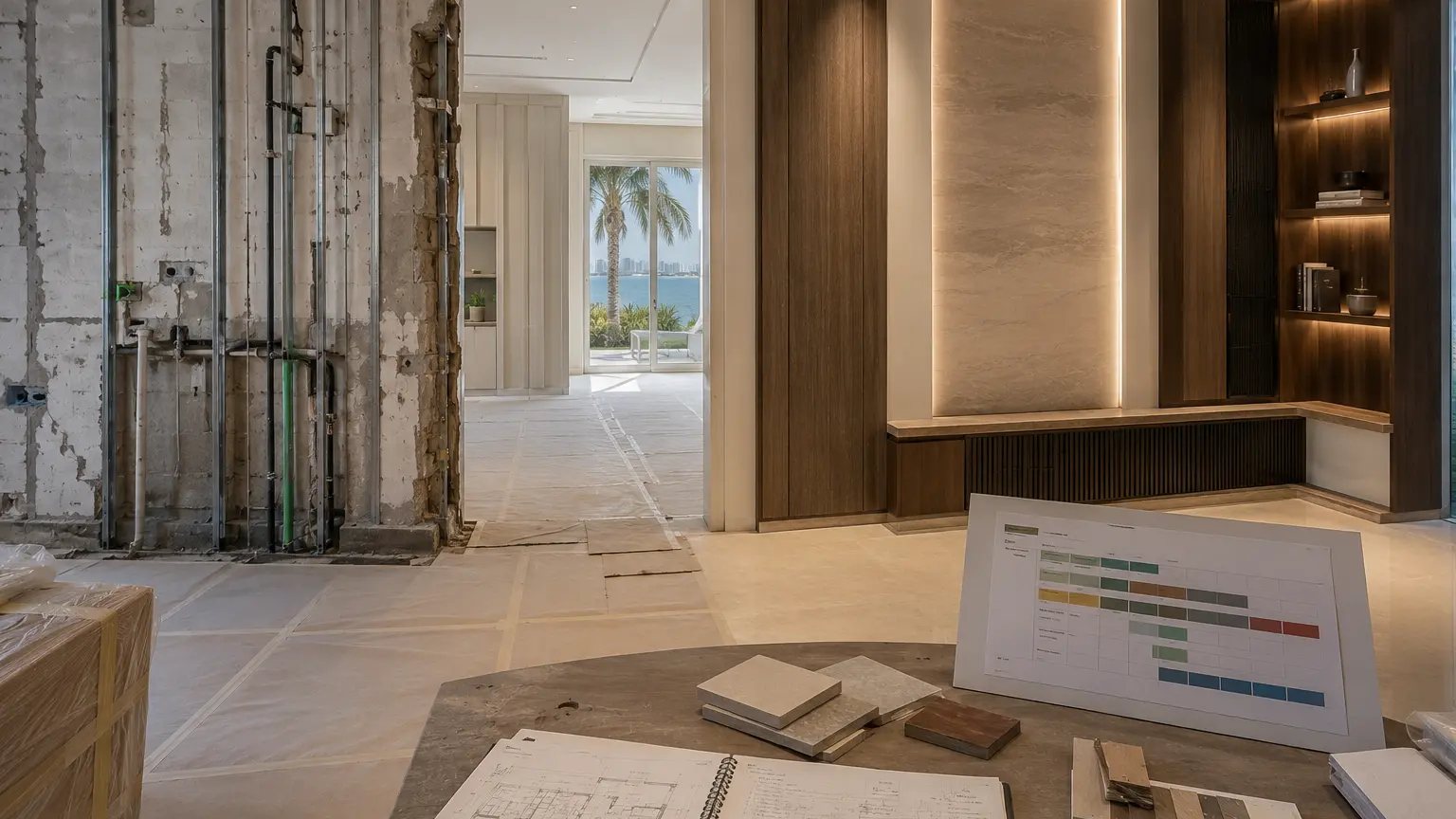
- Strip-out and enabling works. Confirm the open items from the survey.
- Construction, then fit-out. Services before finishes, always.
- Commissioning and handover. Test, snag, document.
The point of the sequence is that step six is where surprises arrive, and steps one to five determine how expensive those surprises are.
Living in it, or moving out
Staying in the property during a full renovation is usually more expensive and slower than vacating it, because work has to be phased, protected, and interrupted for services isolation.
For a targeted upgrade to one area, phased occupied work is often sensible. For a whole-house renovation involving services replacement and wet trades throughout, vacant possession is normally the cheaper decision even after accounting for alternative accommodation.
Controlling change once work has started
Change is inevitable on renovation. Uncontrolled change is not.
- Agree in writing how variations are priced and approved, before work starts.
- Keep a running total of approved changes visible at all times.
- Require any discovered condition to be reported with its cost and programme effect before it is worked on.
- Hold a contingency against unknowns and treat it as reserved, not available.
- Set decision deadlines for items on the critical path, and understand what a late decision costs.
Key takeaway
Survey before you scope, scope before you price, and separate necessary remedial work from discretionary improvement. Renovations lose control when those three steps are compressed into one.
Frequently asked questions
It depends on the extent of structural and services work, the approvals required, and the lead times on joinery and stone. A realistic programme can only be built once the survey is complete and the scope is defined; a duration quoted before that is a guess.
The test is whether the existing structure and layout can deliver what you want. If they can, renovation is usually better value. If you are proposing to change most of the layout, replace all services and alter the structure substantially, the comparison should be made properly, because renovation can end up costing more than a new build.
More than a new build, because there are more unknowns. The right figure depends on how much of the building could be surveyed before starting and how old the existing installations are. What matters is that the contingency is explicit and held, rather than absorbed early into the finishes budget.
Written by Decart Building Contracting LLC. This article is general guidance for planning purposes and is not a quotation or a substitute for project-specific professional advice.